
Libralato R6 eco-engine for hybrid vehicles
A hybrid vehicle uses an electric drive train to replace or reduce dependence on the internal combustion engine (ICE), particularly at those points where the ICE operates least efficiently.
Typically efficiencies of reciprocating engines for vehicles are about 30% for gasoline (BSFC 270 g/kWh) and 40% for diesel (BSFC 200g/kWh), although state of the art engines can achieve approx 5% higher levels. A modern vehicle engine is designed to balance a complex set of conflicting parameters: torque and power, engine speeds, low emissions and fuel economy. Optimising any one of these will compromise others. The figure on the left below shows that where torque is high (acceleration), power is low and fuel consumption is high. Where power is high (speed), torque is low and fuel consumption is high. Where fuel consumption is low, torque and power are moderate. The figure on the right shows that where power is high, Carbon Monoxide (CO) emissions are high. Where torque is high Hydrocarbon (HC) emissions are high; where fuel consumption is low, Nitrogen Oxides (NOx) emissions are high. Therefore advanced catalytic converter after treatment is required.
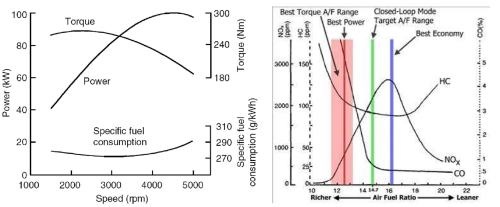
Fig.1 - Torque, Power, BSFC relationship and BSFC Emissions relationship
The figure below illustrates fuel consumption values for a typical gasoline engine.
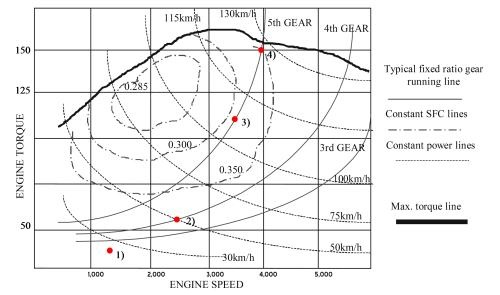
Fig.2 - Engine Efficiency at Key Operating Points
Using the Brake Specific Fuel Consumption figures, the engine efficiency can be calculated at key operating points:
- Urban traffic 24 km/h / 15mph (bsfc: 500), engine efficiency = 16%
- UK urban speed limit 50 km/h / 31mph (bsfc: 400), engine efficiency = 20%
- Optimum speed 107 km/h / 66mph (bsfc: 310), engine efficiency = 26%
- Highway speed 128 km/h / 80 mph (bsfc: 350), engine efficiency = 23%
- The engine very rarely operates at its optimum efficiency point. For the values given, this engine's peak efficiency is 31%.
The figure below shows that a hybrid can avoid use of the engine altogether in it's least efficient operating zone. The engine can also be pushed into a more efficient operating zone whilst running at low speed, by increasing the load to generate electricity. This also has the effect of reducing CO emissions and NOx to an extent.
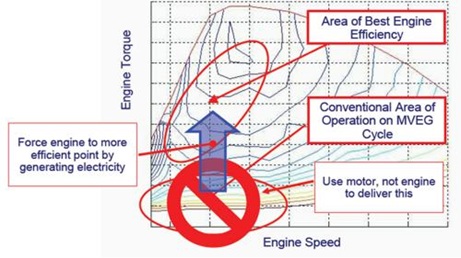
Fig.3 - Hybrid engine efficiency
All light duty vehicles in Europe are now tested against the Worldwide Harmonised Light Vehicle Test Procedure (WLTP) in order to normalise comparison. As their names suggests, the urban and extra urban parts of the cycle are designed to represent driving conditions in towns and on highways. (these figures should generally be inflated by 10% to reflect 'real world' conditions)
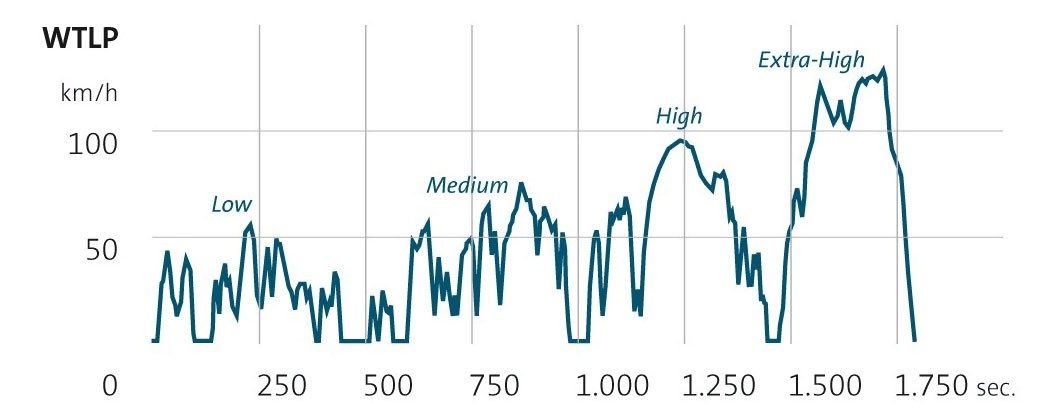
Fig.4 - Worldwide Light Duty Test Cycle
It is obvious that the urban cycle involves repeated 'stop-start' driving compared to more sustained high power driving in the extra urban cycle. The urban cycle causes higher emissions due to the engine operating in it's least efficient and most polluting zones.
When the actual motive energy requirements of the average vehicle are calculated, based on vehicle weight, speed and acceleration, frontal area, drag co-efficient, rolling resistance and angle of incline; it can be seen that average urban motoring generally requires less than 20kW of power whilst highway driving generally requires less than 50kW.
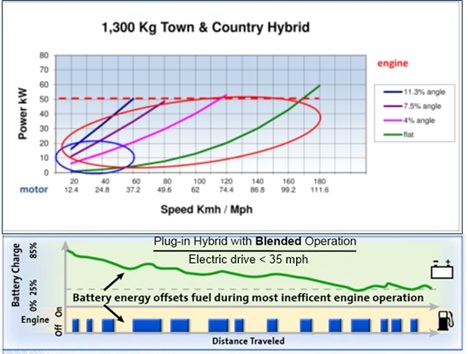
Fig.5 - Town & Country Hybrid Energy Requirements
A hybrid powertrain can avoid the use of the engine in slow moving urban traffic completely and when the engine is required, its operation can be kept within its peak efficiency zone. With a battery sufficient for just 25 miles all electric range, the global average daily driving distance can be undertaken in electric mode. Therefore a battery just 1/10th of the size, weight and cost of a long-range EV battery is fully utilised. Where greater acceleration / power is required, the engine and motor can be combined. We call this approach "Town & Country hybrid"; enabling the average car to achieve 120+ mpg (UK), 50 g/km CO2, in a way that is cost neutral compared to diesel engines (plus aftertreatment), with 60% year-on-year fuel cost savings.
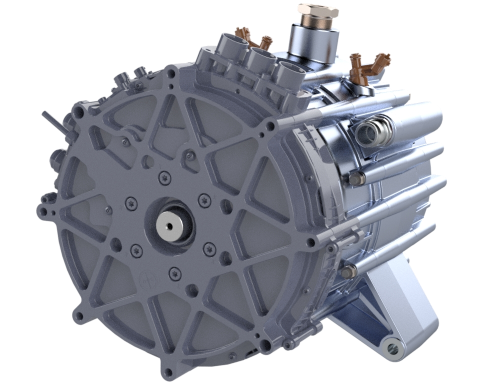 >
>Fig.6 - R6 Eco-engine with Yasa motor
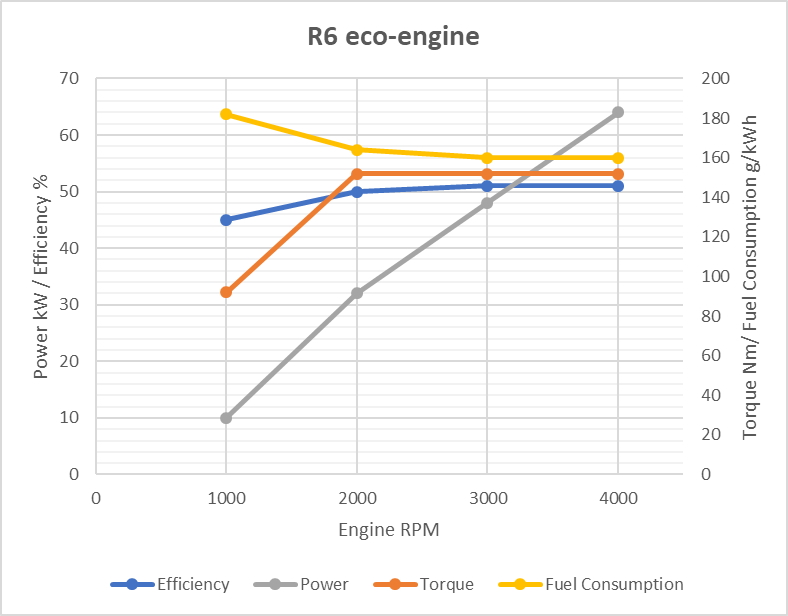 >
>Fig.7 - R6 Eco-engine performance targets
The following diagram summarises the advantages of the Libralato engine for use in hybrid vehicles.
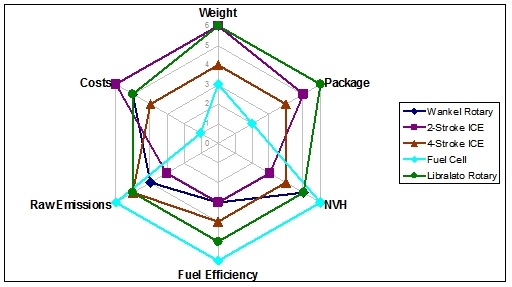
Fig.8 - Libralato Hybrid Powertrain Spider Diagram